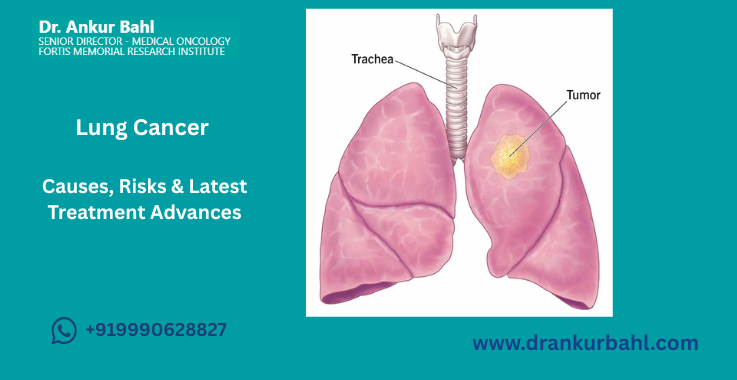
Lung cancer remains one of the most common cancers worldwide, but early diagnosis and modern treatments have significantly improved outcomes. This blog explains lung cancer in simple, easy-to-understand language, highlights major causes and risk factors, and discusses the latest treatment advances available today.
What Is Lung Cancer?
Lung cancer happens when abnormal cells in the lungs grow uncontrollably. These cells form tumors and can spread to other parts of the body if not treated early.
The two main types are:
Understanding which type you have helps doctors like Dr. Ankur Bahl create a personalized treatment plan.
Common Causes of Lung Cancer
The exact cause can vary, but several factors greatly increase the risk:
1. Smoking
Cigarette smoking is the top cause of lung cancer.
Even passive smoking (breathing someone else’s smoke) can be harmful.
2. Air Pollution
Long-term exposure to polluted air, especially in big cities, raises lung cancer risk.
3. Occupational Exposure
Jobs involving asbestos, arsenic, diesel fumes, and chemicals increase the risk.
4. Family History & Genetics
If someone in your family has had lung cancer, your risk may be higher.
5. Indoor Pollutants
Radon gas and biomass fuel used for cooking in poorly ventilated homes can also contribute.
Who Is at Higher Risk?
You are at higher risk if you:
- Are a current or former smoker
- Live or work in areas with high pollution
- Have a family history of lung cancer
- Are exposed to chemicals or asbestos
- Have chronic lung diseases
- Are above 50 years of age
Dr. Ankur Bahl emphasizes that early screening can help detect lung cancer before symptoms develop, especially in high-risk individuals.
Early Symptoms You Should Not Ignore
Lung cancer symptoms often appear late, but some warning signs include:
- Persistent cough
- Chest pain
- Breathlessness
- Blood in sputum
- Weight loss
- Frequent chest infections
If you or someone you know experiences these symptoms, a timely consultation with an oncologist is important.
Latest Advances in Lung Cancer Treatment
Modern treatments have revolutionized how lung cancer is managed. Treatment depends on the stage, type, and patient’s overall health.
Here are the most advanced and effective options available today:
1. Immunotherapy
Immunotherapy helps your body’s own immune system recognize and destroy cancer cells.
It is effective, especially for advanced lung cancer, and is now a major treatment recommended by leading oncologists including Dr. Ankur Bahl.
Key benefits:
- Improves survival
- Fewer side effects than chemotherapy
- Works even when cancer has spread
2. Targeted Therapy
Some lung tumors have specific gene mutations. Targeted therapy works by blocking these abnormal genes.
Common targets include:
Doctors run gene testing (biomarker testing) to identify the best targeted drug for each patient.
3. Minimally Invasive Surgery
For early-stage lung cancer, VATS (Video-Assisted Thoracoscopic Surgery) and Robotic Surgery allow tumor removal through tiny cuts.
Benefits include:
- Less pain
- Faster recovery
- Shorter hospital stay
4. Advanced Radiation Therapy
Techniques like SBRT (Stereotactic Body Radiotherapy) deliver high-precision radiation directly to the tumor while protecting healthy tissues.
5. Chemotherapy
Still used effectively in many cases, especially when combined with immunotherapy.
6. Lung Cancer Screening (Low-Dose CT Scan)
A low-dose CT scan can detect lung cancer early—before symptoms appear.
Dr. Ankur Bahl recommends screening for:
- Smokers or ex-smokers aged 50–80
- High-risk individuals
Early detection dramatically improves survival rates.
Prevention Tips to Reduce Your Risk
While not all cases can be prevented, adopting these lifestyle habits can significantly reduce your risk:
- Quit smoking and avoid secondhand smoke
- Use masks when exposed to dust or pollution
- Improve indoor ventilation
- Get regular health checkups
- Follow a healthy diet and exercise routine
Expert Opinion – Dr. Ankur Bahl
Dr. Ankur Bahl, a highly experienced medical oncologist, believes that personalized treatment is the future of lung cancer care.
With the combination of genetic profiling, targeted therapy, and immunotherapy, patients today have far better outcomes than ever before.
If you have symptoms or fall under a high-risk category, early consultation can make all the difference.
Conclusion
Lung cancer can be life-threatening, but advances in diagnosis and treatment have made it far more manageable and treatable. Being aware of the causes, risks, symptoms, and modern treatments empowers patients to take timely action.
If you need personalized advice or treatment guidance, consulting an expert like Dr. Ankur Bahl can help you make informed decisions and receive the right care at the right time.